My IASH Fellowship Ends …

IASH - Institute for Advanced Studies in the Humanities

‘All good things must come to an end’, as the saying goes. And an IASH Postdoctoral Research Fellowship is a thoroughly good thing.  I handed back my keys with sadness today, but I have had a great year. (The Fellowship was technically six months, but I was graciously permitted to hang around, retaining the use of my office for the rest of the year, which was wonderful, and enabled me to continue data-gathering in the Library’s Heritage Collections.)

If you are looking for a next step after your PhD, or if like me, you’re making a change of direction – or need a spell concentrating on a particular research question in the Humanities – do consider applying.

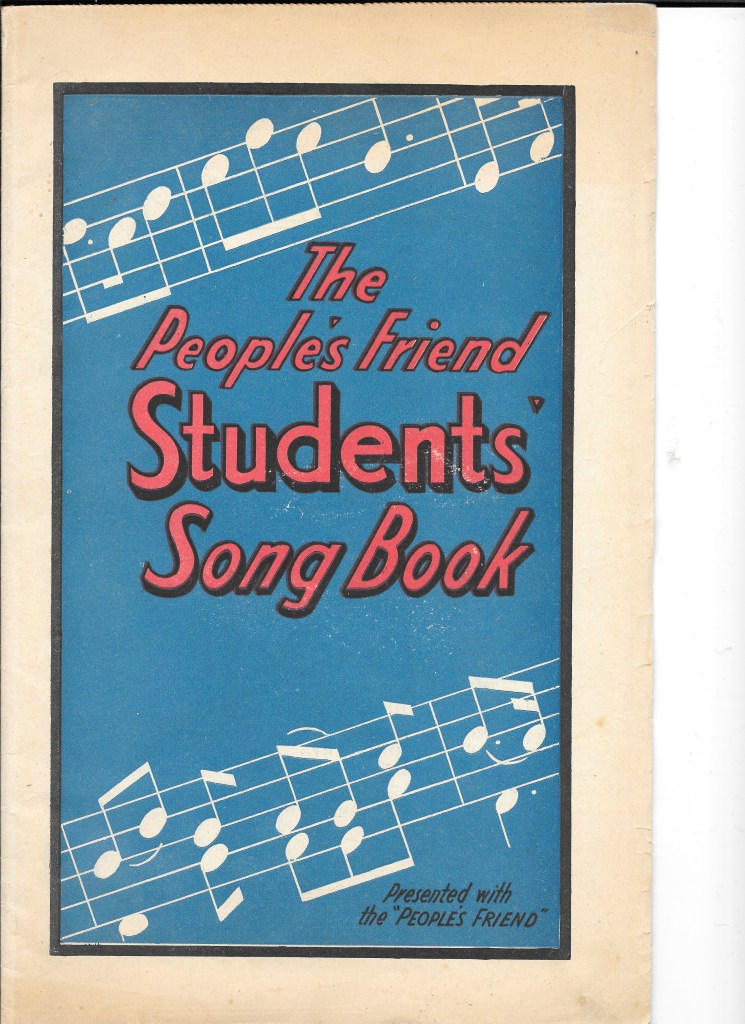
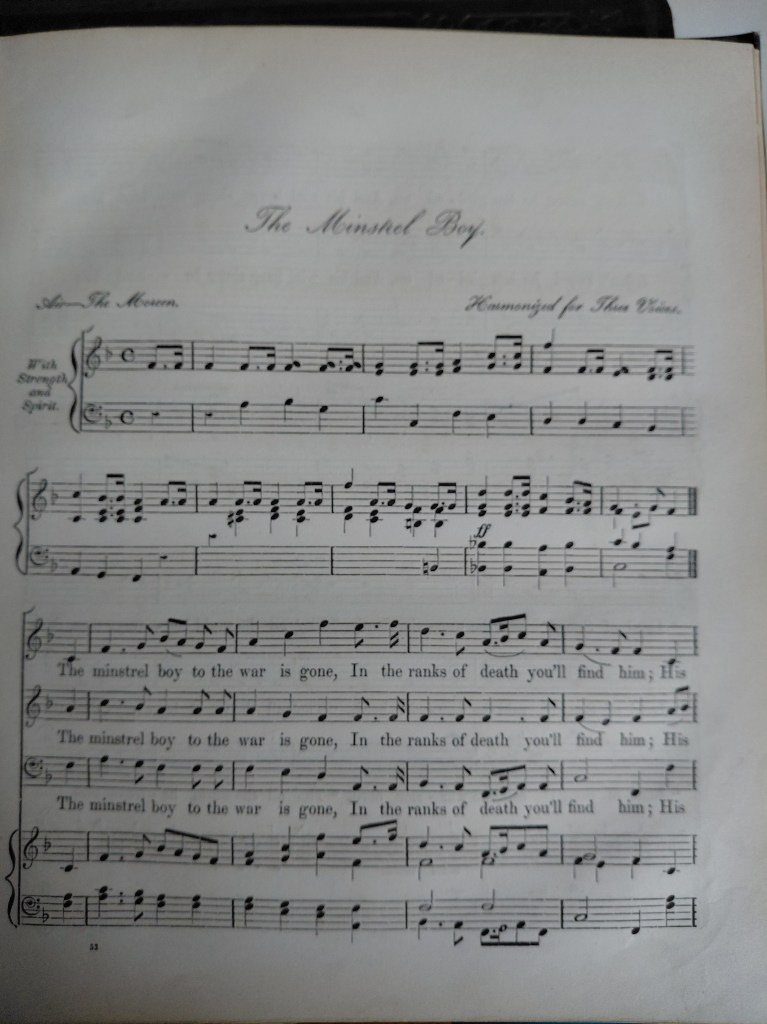
I devoted my time to examining the archives of the Edinburgh publishers, Thomas Nelson.  I initially entitled my project, ‘From National Songs to Nursery Rhymes, and Discussion Books to Dance Bands: investigating Thomas Nelson’s Musical Middle Ground’, but the nursery rhymes turned out to be poems, and weren’t what I had in mind! The rest? Yes, I researched them.

I found quite a bit of correspondence between Thomas Nelson’s editors, authors and compilers, which was gratifying. I was able to trace material in journals that I would not have had access to, had I not been in Edinburgh; there’s the excellent University Library collection of actual and digital resources, and the National Library of Scotland just down the road.

I have deferred commencing any significant written work until I had explored all the potentially relevant materials in the files. I believe I’ve now reached that point.  As a result of conducting this research, I have ideas for extending my research in new directions, and I’m contemplating writing another book, so I need not only to explore potential audiences, but also to start working on a book proposal

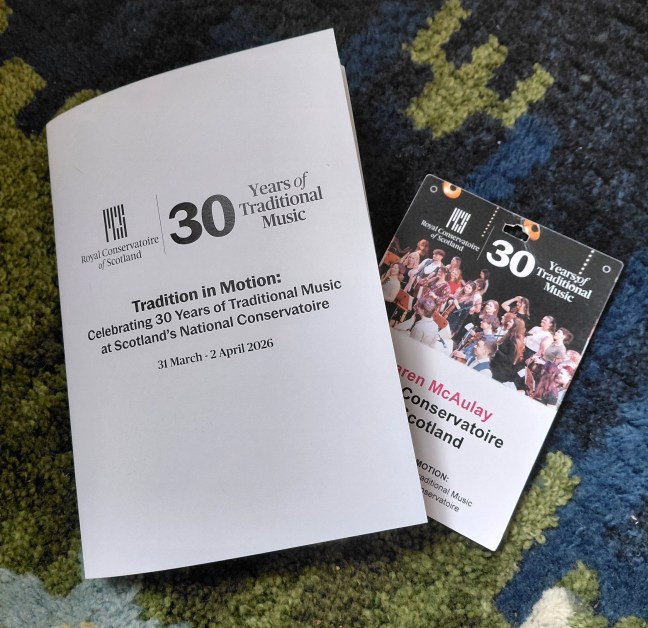
However, I have also applied for and recently won an Athenaeum Award from the Royal Conservatoire of Scotland to enable me to conduct an oral history project. This work, to be conducted in 2026, will hopefully enable me to write a final chapter for my proposed monograph. (I’ll be blogging about this before too long, but there are things I need to do first, before I spill the beans!)

I have benefited from being part of a research community, hearing other scholars’ papers and discussing our research; and attending researcher development sessions. I  was able to focus on my new direction as a researcher – important, after so many years as an ‘alt-ac’ researcher working in professional services. In this regard, I have also been in a position to submit some other unrelated work for publication, and I spoke at a conference at the University of Sussex in June, all of which gives me a sense that my research is gathering momentum.

Today, my last day, I took a cake to the University Library’s Heritage Collections; went to IASH’s Christmas lunch; and mulled over aspects of my ethical approval submission for my next project. (Oh, and drank quite a bit of coffee!)

Thank you so very much for a great year, IASH!

IASH (Institute for Advanced Studies in the Humanities)

It’s Getting Closer! The Next Article

Anyone looking at my publication record is soon going to be mightily confused. The article about Sir John Macgregor Murray concerns a Highlander who lived from 1745-1822. I wrote it at a time when I was still researching Scottish music collecting and publishing in the late eighteenth- and early nineteenth-centuries.

Today, I received the final proofs for the next extensive article. This time, it’s about Scotswomen with portfolio music careers in the late nineteenth- and early twentieth-centuries. (Two of them were of English parentage, but let’s not quibble!) A spin-off from my latest book, in the sense that I turned my focus onto a number of individuals who had hung around in the shadows of the book, this article extends over some 22 pages, and luckily there wasn’t a great deal needing changing in the proofs.  But the instructions for using the proofing system extended over 49 pages, and there was also a ten-step quick tour of the process. I nearly had a fit at the sight of the former, but the latter told me nearly all I needed to know. Job done.

There are still more articles in the pipeline; I’ll flag them up as they come along! Meanwhile, there’s the small matter of Christmas requiring my attention during the semi-retired part of my existence, not to mention the continued tidying up of our poor scarred, rewired residence! But first, I need stamps …

Image: Glasgow Athenaeum, forerunner of the Royal Conservatoire of Scotland (Wikimedia Commons) – where two of ‘my’ musical ladies received their advanced musical training.

New Article about Sir John Macgregor Murray, in the Folk Music Journal

Finally, an article from me after a long spell of apparent silence. ‘Sir John Macgregor Murray: Preserver of Highland Culture, Music and Song’. Folk Music Journal vol. 13 no.1, pp.50-63. 

The article started out as a conference paper, but I felt it deserved a wider audience. Let me share the abstract:-

Abstract

Sir John MacGregor Murray is known by Scottish music historians as the man who retrieved Joseph Macdonald’s Compleat Theory of the Scots Highland Bagpipe. This act of transmitting a work about Highland culture was just one instance of the Highland chieftain’s involvement in facilitating the artistic output of his native country. A founder member of the Highland Society of Scotland, he traversed the Highlands in pursuit of James Macpherson’s Ossian poetry, assisted song collector Alexander Campbell in planning his own itinerary in the Highlands and Western Isles, and helped establish a piping competition in Edinburgh. Sir John was one of a number of individuals who played a mediatory role in the collecting and publication of Scottish music.
This article outlines Sir John’s role in the codifying and promotion of Highland culture, embracing literary as much as musical endeavours. It also introduces some of the other individuals who played a similar role in Scotland during the Georgian and Victorian eras.

EFDSS (English Folk Dance and Song Society) website

Folk Music Journal

Lanrick Castle Gatehouse (Wikipedia)

Progress! Post-Rewiring, my Desk is cleared for Research again ..

I’ve proof-read an article for The Magic Lantern; navigated Cambridge University Press’s article dashboard for my impending RMA Research Chronicle article; signed an ‘Ironclad’ contract; updated my Pure (institutional repository) account; signed up to a short online course in connection with next year’s research project; and attended a meeting.

It feels as though it’s been a busy morning. One could argue that it has been more administrative than actual research work, but research doesn’t get done without a secure administrative foundation, so that’s good enough for me.

Post-Rewiring?

I’d best describe my mental state as ‘fragile, but functional’! But I’m getting there.

Back to Normal on Monday? Well, Maybe …

Very tall pile of empty cardboard boxes

Monday mornings are contracted research time. And research there will be. I have a couple of things to proofread, for a start, quite apart from picking up the threads after last week’s chaos.

The Thrills

Reader, if you like the thrill of the unexpected, and a break from normal routine – go for the total rewiring of an Edwardian house. The chasing round the landscape for TrashNothing and Facebook Marketplace free cardboard boxes. The filling and stacking of them. The hotel stay, the restaurant bills, and the, ‘Could you possibly come back a day later? Making sure your ceiling doesn’t come down is going to add a bit of time to the job’ kind of thrill.

There were three high points: we went to the cinema. Unheard of! I swam lengths for a solid hour in the hotel pool. And discovered that Terikyaki salmon fillets are my absolute favourite food. Other than that, it was a question of just getting through the experience of being away from home, and without my own car. In a room with one desk and one chair, but two occupants, I never felt less like trying to do any research, so it’s a good thing I wasn’t expected to.

Chaos

And then we returned home. The Edwardian house is now rewired (ceilings intact); spotted with plaster patches in walls and ceilings – meaning I’m currently getting redecorating quotes – and it was so dusty that we were grateful to have arranged a full, in-depth clean. And of course, everything needs unboxing. But not everything all at once, right now, if decorators are to start doing things to walls and ceilings! My books are back on shelves, though I don’t know for how long – still, they give the impression that everything is settling down again.

Unsettled

But worst of all, it seems that some of us are very, very unsettled at such major upheaval. And it feels as though I’m on the receiving end. I never want to hear about our discarded lampshades again! But I will. Repeatedly. (Frankly, I don’t CARE if our old dusty lampshades were discarded without our agreement. Now we have new ones.)

And … Breathe!

It will be with a great deal of relief that I open my work laptop tomorrow morning, take a deep breath, and try to think only about research for 3.5 solid hours!

Rewiring (Domestic, not Neurological!)

A smell.  (My nose is as finely-tuned as my ears are not.) 

A melting fuse.

One thing led to another, and we’re getting the whole old house rewired this week.  I’ve rearranged my part-time morning and taken my part-time day off. And I’m not going through to Edinburgh.  With everything packed up in boxes during the upheaval, and ourselves displaced, I simply can’t get on.  I hesitate even to tackle emails, in case I forget where I got to in the different aspects of my work. I can’t simultaneously get my head around the intricacies of research, which explains why I’m not blogging as much as usual.

It appears that the ‘semi’ part of my retirement is to be dedicated to caring for the old house.  (Elderly houses have their own unique requirements and challenges,  different to older humans. At least Himself doesn’t have dodgy ceilings and won’t need redecoration.) 

In semi-retirement, it falls to me both to coordinate things – and sometimes repeat things.  (I’m the only one with hearing aids. Although this is disputed, I find they work fine, as evidenced by the fact that I get to repeat what the electrician said!) And, particularly but not entirely, because a rewire is stressful for all concerned, I find myself on the receiving end of quite a few adverse comments. (I’m apparently frequently very annoying.)

I’ll be glad when this week is over.  My kind and unfailingly courteous historical publishers await me!

Mystifying Timewarp Challenge

It’s not as though I’m unaccustomed to what I’ve been doing in odd moments for the past few days.  Over the years, I’ve opened dozens, indeed hundreds of old song books and other music publications, trying to read their prefaces, annotations and harmonic arrangements as though I were a contemporary musician rather than a 21st century musicologist.  Looking at music educational materials is likewise not new to me.

Enter Dr Walford Davies and his The Pursuit of Music

He was the first music professor at the University of Aberystwyth, but he was also hugely popular in the 1920s-30s through his broadcasting work – fully exploiting the new technology of wireless and gramophone for educational purposes, and to share his love of music with the ordinary layman wishing to know more about all they could now listen to. This book was written after he’d mostly, but not entirely retired.

It wasn’t exactly what I expected! If I thought he would write about what made the Pastoral Symphony pastoral, or Die Moldau describe a river’s journey, I rapidly had to change my expectations. 

His audience was apparently not just the average layperson, but also young people in their late teens, not long out of school. If the reader didn’t play the piano, they were urged to get a friend to play the examples for them.  (Considering the book is over 400 pages, you can imagine how long they’d be – erm – captive!)

Dedication

And this was aesthetics, 90 years ago. I struggled to get into the mindset of a layperson wanting to know what music (classical, in the main) was ‘about’, without knowing what a chord was, or realising that music occupies time more than space. Would I have benefited from that knowledge? Would being told in general terms what the harmonic series was, have helped me appreciate the movements of a string quartet? Or Holst’s The Planets?

It wasn’t about musical styles over the years. I didn’t read it cover to cover, but neither did it appear to explain musical form and structure as I would have expected.

Davies’ biographer, H. C. Colles, did comment that it was a mystifying book, and suffered from the fact that the author’s strengths were in friendly and persuasive spoken, not written communication.

I’ve only heard snatches of his spoken commentary, so I can’t really say.  Apart from which, Colles made an observation about Davies’ written style. Colles was a contemporary authority who knew Davies personally – and he may have been picking his own words carefully, so as not to cause offence. My own disquiet is more a matter of content:  was it what his avowed audience needed, to start ‘understanding music’?

I think I have been mystified enough.

I wonder what the Nelson editors made of this book by one of the great names of their age? They published it, and I think regarded him as a catch, but what did they actually think?!

And did the layperson, assuming they got through the 400+ pages, lay it down with a contented sigh, feeling that now they understood music?

Bag a Bargain! Routledge has a Black Friday Sale

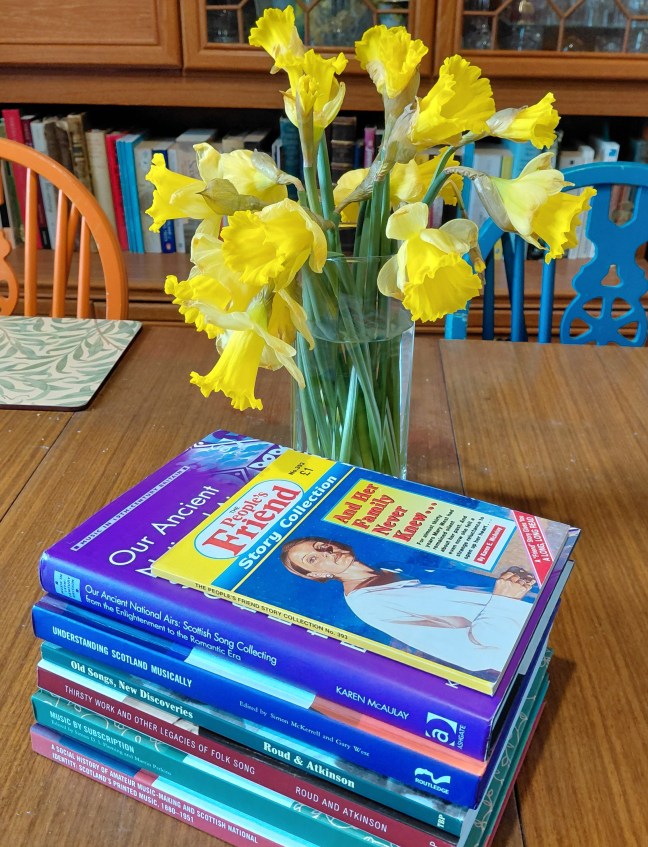
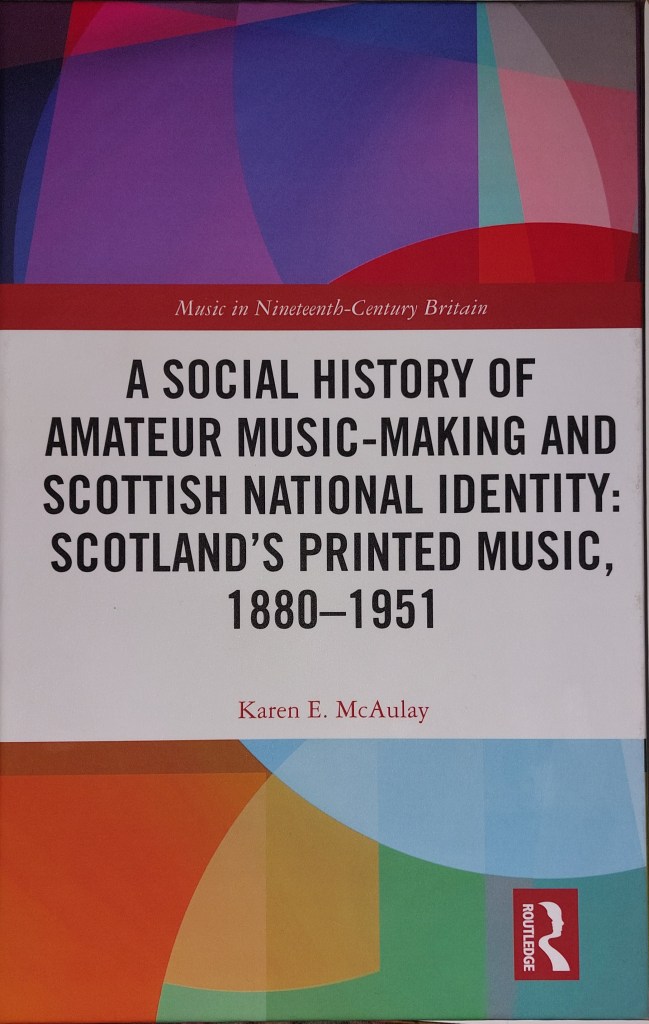
It would be remiss of me not to point out that Routledge’s Black Friday sale makes the e-book version of my book very affordable! (Maybe someone might even buy you it for Christmas?).

Those preferring to read a hard copy might point out to their library that there’s no time like the present…

A Social History of Amateur Music-Making and Scottish National Identity: Scotland’s Printed Music 1880-1951

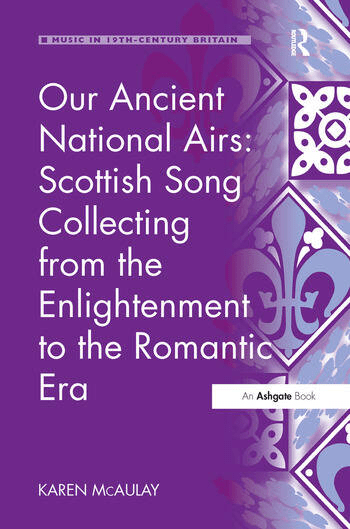
Its forerunner, Our Ancient National Airs, is also in the sale. 

There! Your Christmas reading is sorted.

Archival Truths: the Reality of Archival Research

White puzzle with black gap where the missing piece should be.

I can say this very succinctly!

That which you seek may not be there.

Indeed,

That which you seek may not exist.

You can look as hard as you like, for as long as you like, with as much concentration and determination as you can muster from every inch, every fibre of your body … but not everything you want to find, will have survived to the present day, whether in archives or attics, boxes or basements.

Thus, the Thomas Nelson archive may have a handlist, but even the handlist (a second or third version of a handlist made by unknown hands at some point in the past) may document items that no longer exist. I struck lucky with my searches for correspondence about the four Nelson Scots Song Books (1948-1954). Of course, I still don’t know if there was further correspondence between the song book editors (by which I mean the compilers), as well as that between the compilers and Nelson’s in-house editors. But I found enough to be interesting, and to document the general story of their coming to fruition. It is possibly significant that they were published post-war, by the educational department editors, who had all been in Edinburgh for years by now.

However, for the past few weeks, I’ve been looking for correspondence between the author of a 1935 (ie, pre-war) book aimed at the general reader, and Nelson’s in-house editors. There was correspondence as early as 1932 – I know that much, but I can’t find it. Not only have I completely failed to find it, but we’ve discovered at least half-a-dozen boxes are missing. I bet you anything the missing correspondence is (was) in one or more of those missing boxes! Now, Nelson had offices in Edinburgh and London. The editorial staff for educational materials seemed to have been based in Edinburgh before the Second World War, whilst some – but not all – of the other editorial staff joined them from London’s Pater Noster Row at the start of the war. Thus, my 1935 book – not a school textbook – may have been edited from the London office, not in Edinburgh. Hold onto that knowledge.

Missing in Enemy Action?

When the London offices were bombed, the remaining London editorial staff, including the juvenile literature department, were found temporary office accomodation with another publisher. If my missing correspondence was lost either during a move to Edinburgh, or during the London raids, or in the general upheaval that followed, then they will never be found.

Ironically, when I was researching in the British Museum for my Masters degree, there was a particular Augustinian plainsong manuscript that I desperately needed to see – I’d travelled from Exeter to see it. But I filled in the paper slip (this was 1980 – that’s how you did it) – and got the slip back, marked ‘Missing in Enemy Action’. I rather think I have come up against the same problem again!

And the handlist? The original copy could even have been made by Nelson’s own staff, maybe in Edinburgh, but incorporating letters that had come up from London.

There remain four ‘temporary boxes’ at the end of the sequence, which may contain my prey. And a handful of other boxes that I can’t look at until the next time I’m in Edinburgh. But I’m preparing myself to accept the almost inevitable. In this particular instance,

That for which I search may not exist at all.

Imperial War Museum image (copyright © The Family Estate (Art.IWM ART 16123) – I can only share the link).

Good Days and Bad Days in the Archives

Anyone who has spent any length of time on archival research will agree with me that there are days when nothing of interest really turns up! This week has been a case in point.

On the positive side (and this relates to research time beyond the archives), I used to have ONE spreadsheet listing all the significant names – and relevant dates – of the individuals I’ve encountered over the past year or so, be they Thomas Nelson editors, authors, or connected in some other capacity. I now have a second spreadsheet, charting the weird and wonderful departmental codes appearing on letters and memos to/from the Parkside (Edinburgh) and Pater Noster Row (London) offices; I’ve again listed names associated with those offices. This is likely to be of interest to me, but little interest to anyone else. Still, there’s a quiet satisfaction in having clarified who did what, where and when. Whilst I was working on that, I  discovered that one of the earlier editors had previously been an HMI before joining Nelson’s. That was a gratifying discovery, even if he had been a geographer, and had nothing to do with publishing music education materials.

I’ve also continued reading a book about an individual who published a book with Nelson’s in 1935; I’ve borrowed another; and recommended a useful e-book to my home institution library. It hasn’t been a wasted week.

But, glancing through my archival notes and social media postings, there weren’t any significant discoveries. I had a long list of boxes to trawl, in my hunt for interesting correspondence with one particular author, but on Tuesday I realised I’d already seen all that was worth seeing in two boxes, whilst the third box contained ‘the editor regrets’ letters to would-be authors. (A whole boxful of dashed hopes for dozens of would-be authors, ninety-odd years before my own disappointment in an unproductive, rainy day.)

Dutifully Flicking through Pages (FOMO)

Back I went to Edinburgh yesterday, eagerly anticipating fresh discoveries. Did I find the sought-after correspondence? No. There was plenty to amuse, but I can’t say I learned anything more about music education publishing. For example, my curiosity was piqued by a book proposal for a collection of prayers. The editor wrote to a colleague that he didn’t think they wanted any prayers, but he would decide finally when he saw how the would-be author had prayed. I wish I knew what he decided!

I shook my head sorrowfully at the rather naive author who wrote to Nelson’s asking if they published a particular genre of material. I suppose in the 1930s, it was less easy to find out, but could they not have gone into a library or bookshop and ASKED? Again, there was no copy of a response.

Another book proposal that presumably foundered, was the one  unappealingly entitled, ‘The Unamiable Child’. I don’t think they offered the author a contract. (More recently, wasn’t the Horrid Henry series so beloved by children and their parents, about precisely such a child?  Maybe the earlier hopeful author was just ahead of their time.)

Queen Margaret University / Edinburgh College of Domestic Science

I did, however, come across some correspondence which might be of interest to a historian of domestic science education. It appears to be a long time since anyone seems to have published anything about one of QMU’s earlier forerunners, the Edinburgh College of Domestic Science. (Tom Begg wrote a book, The Excellent Women: The Origins and History of Queen Margaret College, in 1994.) But if you know anyone currently researching it, then I can advise them that 1933 saw a run of correspondence with Thomas Nelson about a book they were producing. I can let them know which folder to consult, if they’d like to follow this up!

Time for Tea

As I approached the end of my second day in the archives, one final memo made me smile. (Again, this had absolutely nothing to do with music – I was just dutifully flicking through pages to ensure I hadn’t missed anything.) A memo was sent to three of Thomas Nelson’s Edinburgh managers in July 1956. They were warned that they might have to entertain a couple of visitors from Melbourne whilst their colleague was away. There were a couple of points that they needed to be aware of. I didn’t read past the first of these!

‘It might be wise to point out that Mr C is a teetotaller’.

Let’s hope they remembered. Reading between the lines, ‘hospitality’ was clearly not always a cup of tea and a scone!

Tray containing tea and scones
Hospitality

Image by Dayoung Seo from Pixabay