I’m contemplating writing another book. It’ll be based on my recent researches as an IASH Fellow, obviously. But I’ve had a brainwave of an idea for the final chapter – which involves a bit more research – so the past few days have been dedicated to exploring possibilities. As I now know, from the historical Thomas Nelson point of view as much as my own present existence as a scholar, publishers like publishing things in series. It helps them sell, if readers can see how a book fits into a larger grouping of books. I’ve been thinking about where my book might fit in.
I’ve also had a wee jaunt to Dundee to talk to a scholar of my acquaintance; and today, I sat down to write an email. Who’d have thought it would take most of an afternoon to write an email?! But when it’s important, it’s worth taking some effort in the crafting of it.
‘Faint heart never won fair lady’
Finally, I thought it was just right. I mused that maybe I should leave it and re-read it tomorrow. But no, I must be resolute. So, I did not prevaricate. More of this thrilling story in due course …
Seriously, why do we do year-end reviews? To show the world what we’re most proud of? Quite possibly. To convince ourselves – and the world – that really, we’ve been very busy and deserve a pat on the back? Perhaps so. I took to the internet to find out why businesses do reviews, and why a career-minded individual might do one of their own.
Consulting the Experts
Braze.com said that year-end reviews offer the chance to ‘create distinctive content’; to ‘build loyalty’ and to remind the world what your particular business does best. To that end, obviously you log milestones, achievements and events. You use multimedia formats, and draw upon customer data. This all makes sense, although I don’t know that I, as an individual, can do all these things. (No customers, for a start!)
I tried again, and found a Harvard Business Review posting about, ‘How to create your own “Year in Review“. There’s plenty of sound advice here, suggesting that I should pause and reflect upon successes and failures; lessons learned; proudest achievements; who has helped me most; how my strengths have helped me to succeed; and whether there’s anything I wish I’d done differently. This is much more introspective, and certainly valuable advice. Whether I’d want to blog about all these headings is a moot point, though.
For me, I have an extra conundrum. I shall be retiring from the Whittaker Library at the beginning of July. I hope to continue the research element of my work, though. So – in one sense I’m writing a career-end review, as far as librarianship is concerned, but it’s not a career-end review for me as a researcher. 
The Harvard Business Review suggests using your diary to capture key events on which to reflect. I spent a few minutes doing just that, yesterday. Immediately, I realised that there’s one thing I’m proud of over everything else, and that is that although I spend 85% of my time as an academic librarian, my 15% as a postdoctoral researcher is actually highly productive.
What do I do best? I get things done.
‘She’s a Librarian’
I confess, I don’t like hearing this! It makes me feel as though my research activity is dismissed as dilettantism – that I don’t do badly, considering research isn’t my main role. On the other hand, a fly on the wall would point out that yes, I do spend the majority of my time as a librarian. 
Jazz CDs – not a Highlight
So, what did my diary exercise reveal? I’ve catalogued a lot of jazz CDs. This causes me to feel quite a bit of resentment, because I know our readers don’t generally listen to CDs as a format, so all my efforts are to very little avail indeed. Maybe that’s one of the things that I wish I’d done differently. It’s not a high-priority task; however, I am conscious that I don’t want to leave the backlog to my successor. And that’s why I do this dreadfully tedious and repetitive activity!
Retrospective Post Script: that jazz CD cataloguing was indeed a waste of time. I did it because the promise had been made that those CDs (thousands of them) would be catalogued. I didn’t make the promise, but I did feel the obligation to fulfil the promise. My resentment was because it used so little brainpower and expertise, provided so very little fulfilment in the moment, and so little benefit in the long-term.
Equality and Diversity: Stock Development
What I’m more proud of is my efforts to get more music by women and composers of colour, into the library, and most particularly, to ensure that our staff and students know just how much of it there now is in our stock. With a colleague from the academic staff, I’m concocting a plan to raise the profile of this material. 
I also suggested maybe there might be a prize for diverse programming …
And I just heard – there is going to be such a prize – it really is happening. A red letter day! 
For me, a particularly proud moment was being invited to attend a Masters student’s final recital in June, at which one of these new pieces was played. It was a piece requested by a member of staff – I don’t think it was me that actually stumbled across it – but I certainly sourced it, catalogued and listed it. Whilst I’m heartily sick of cataloguing, I do take pleasure in stock development, and in ensuring there are ample means of discovering the music once we have it.
In September, I was gratified that one of our performance departments reached out to me to request more materials by under-represented composers – a sign that the message is getting through, and that staff appreciate that the library really is trying to help.
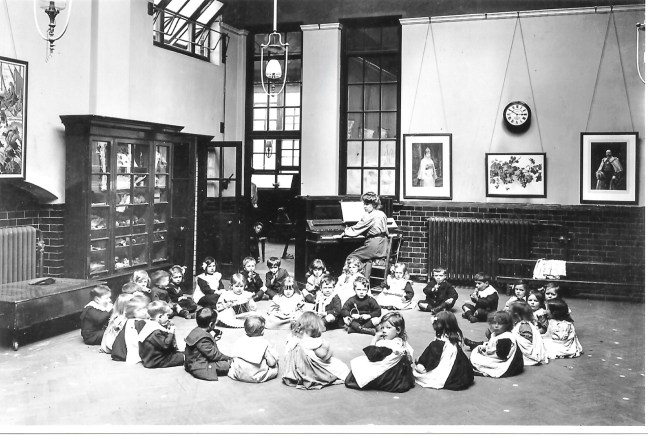
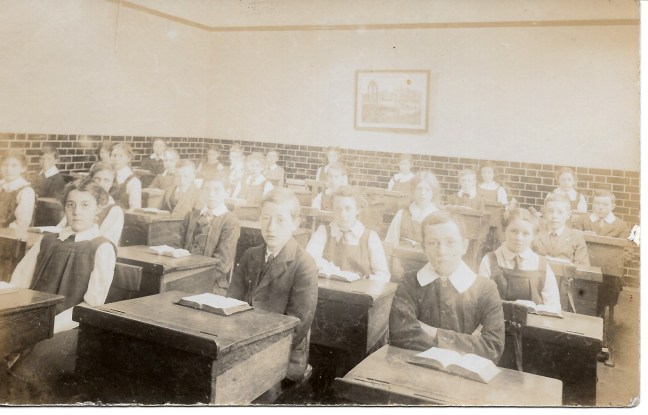
Since October, I’ve also been broadening the stock of music inspired by climate change and ecology, including songbooks for school-children, since we have a number of music education students. That pleases me, too.
What else? Dealing with donations to the library, some eagerly received and others needing sifting through. Weeding stock to ensure there’s room for new material, and ensuring that tatty material is removed or replaced depending on how much it’s likely to be used.
User Education
Some things are cyclical – most particularly providing initial library introductions, and later talking to different year-groups about good library research practice. In June, I gave a talk about bibliography to the Scottish Graduate School of Arts and Humanities, which attracted far more of an audience than I’d ever dreamt of!
Queries, and Research-Related Activity
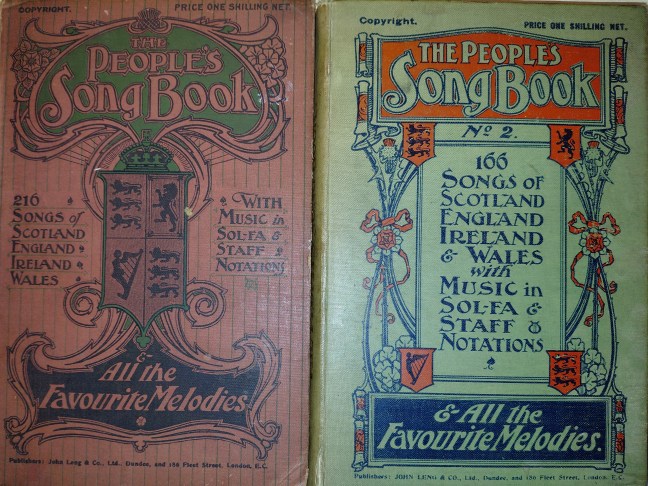
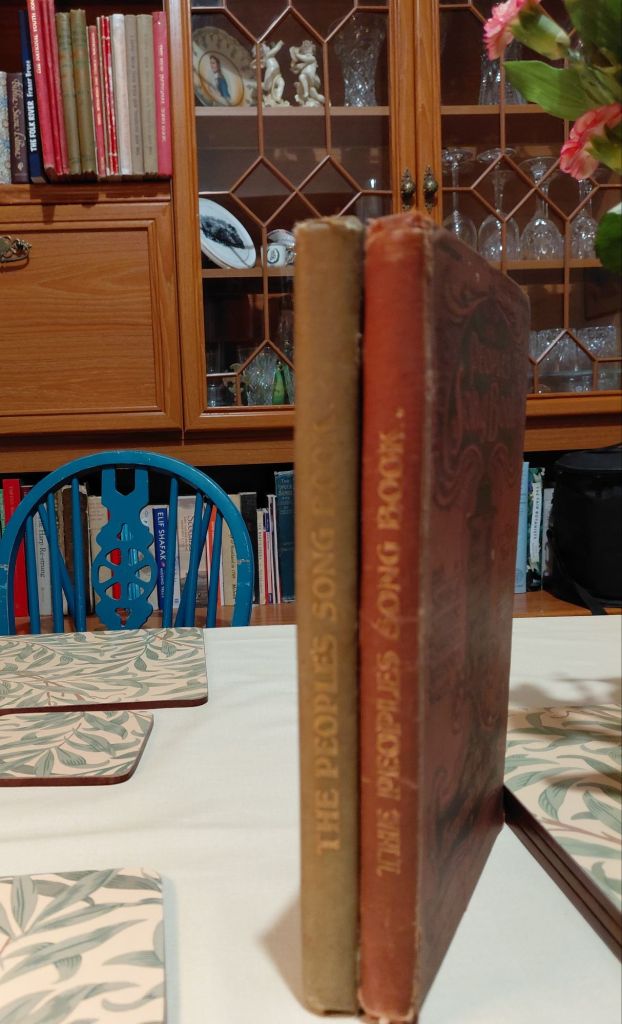
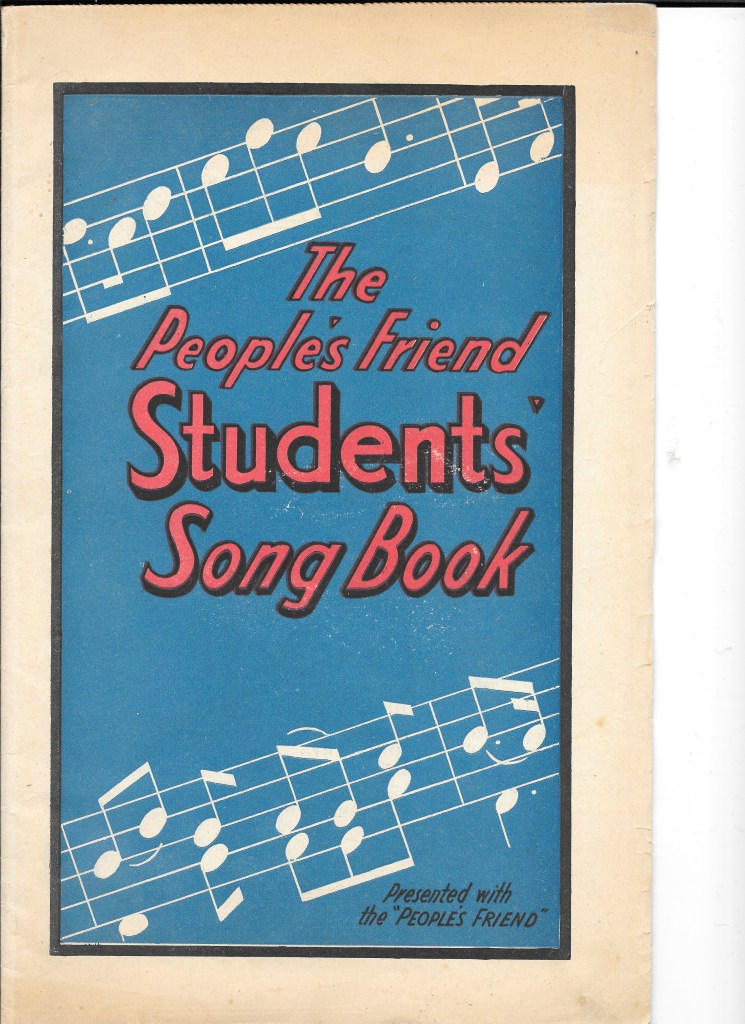
I’ve also dealt with queries – such as one from a Polish librarian, or another from an elderly enquirer wanting to trace music remembered from childhood. And I talked about my research activities at a library training session, even though I was rather afraid of wasting colleagues’ time going on about something that might not feel very relevant. (This autumn, I also obtained and catalogued – in detail – a book of Scottish songs that I have written a book chapter about. It would be dreadful, wouldn’t it?, if someone read the chapter but couldn’t find the song-book in the library!)
Professional Activity
Professionally, I managed the comms for the IAML Congress in Cambridge this summer (with a little bit of help from mascots Cam, Bridge and Don and a couple of fellow IAML (UK & Ireland) librarians, and I think it went quite well. The stats for the blog and Twitter (“X”) rose gratifyingly during this period. I went to a couple of days in Cambridge, but I didn’t speak this time.
IAML Congress mascot Don
A Researcher with Determination
Early on in 2023, I was gratified to receive an LIHG (Library and Information History Group) Bursary to attend a conference at the University of Stirling between 17-19 April, which was about Reading and Book Circulation 1650-1850. This was to be the first of two major successes this year, for I was also elected the inaugural Ketelbey Fellow in the Institute of Scottish Historical Research at the University of St Andrews. I’ve written extensively about this experience in other blog-posts, so I won’t duplicate it here. However, I can’t resist reminding myself of highlights!
Researching key documents in Martyrs’ Kirk Reading Room
Attending both fortnightly research lectures, and ISHR pub lunches on alternating weeks
Many enjoyable hours concentrating on my book revisions – with a view of the sea!
Twilight from my window, St Katharine’s Lodge, St Andrews
We’re not going on a (sniff!) Summer Holiday …
Being a researcher for 15% of the time is not easy – there simply isn’t the time to do all I want to do. Far from ‘dabbling’ in research, I take this side of my work very seriously indeed. I might have been a librarian most of the time, but I have devoted far more than the designated 10.5 hours a week to my research activity! I took annual leave in the summer to get my book draft completed, and took more annual leave to enable me to spend two, rather than 1.5 days researching in St Andrews. I’m doing it again next week; the book revisions must be completed and submitted very soon, and if the only way I can do it is by taking holiday, then that is what I must do. 
In January, I wrote an article for the Glasgow Society of Organists, about a Paisley woman organist and accompanist whom I’d discovered during research over Christmas 2022. Even though it wasn’t for a scholarly journal, it was research done to my usual standard, and I’ve drawn upon that research in one of the chapters in my forthcoming monograph.
I’ve peer-reviewed an article, a book manuscript and a grant application. Considering all that I’ve had on my plate this year, I’m quite proud that I did manage to do these things. I don’t attend reading groups, and I’m not always able to attend research-related events that fall in ‘library time’ – I don’t want to give the impression I’m skiving off library work! But I do want to feel part of the research community, and that was precisely what was so magical about my Fellowship in St Andrews. For those two days a week, I was a researcher, pure and simple.
Roll on 2024! What am I going to do differently?
I’m looking forward to the summer. I feel I’ve been a librarian long enough. I’ll miss doing the user education, and rising to the challenges posed by unexpected or unusual queries. I shan’t be sorry to quit cataloguing, particularly jazz CDs!
I don’t actually have any ‘retirement’ plans as such. Apart from having more time to spend on my role as Honorary Librarian of the Friends of Wighton in Dundee. Whilst I live on the other side of Scotland, at least I shall have more opportunities to leap on a bus or train to get to Dundee Central Library to look after the repertoire that I love.
Little old lady? Not me!
Not Entirely Retiring!
I don’t feel remotely like a little old lady! I hope I’ll continue as a postdoctoral researcher in my present institution, but I’m also keeping my eyes open for any other part-time opportunities that I could pursue alongside that. ’Actively looking’, is the phrase, I think.
With a colleague in another institution, we’re cautiously planning a new research idea. And I also have strands of research that I commenced for my book, but hope to pursue in greater depth once this book is safely further along the publication process. Watch this space.
Wednesday. Glasgow to St Andrews, to do book revisions, and a lecture for the University’s Institute of Scottish Historical Research. (It was about the impact pedagogical and technological innovations had on Scottish music publishers.)
Thursday night. St Andrews to Dundee (expedient – it was the only way to get back in time for work on Friday!)
Sleeperz, where I could not sleep …
Friday morning. Dundee to Glasgow, for a day’s librarianship. One particular query took a couple of hours, but I was told that my reply would make the enquirer very happy … really, that’s all that matters.
New desk lamp – extension cable sorted!
Saturday. Glasgow to Dundee and back for the Friends of Wighton 20th Anniversary celebrations. I attended the speeches and morning concert …
20th Anniversary of the Wighton Centre Sheena Wellington opens Proceedings The Provost of DundeeHarpsichordist Mark Spalding in front of Andrew Wighton’s music booksPurcell’s “Scotch” tune!This is Gaelic singer Wilma MacdougallThis is Sally Garden, the Wighton Musician in Residence a few years ago.
I’m the Honorary Librarian, and my role was to show off Wighton’s books, in the afternoon. Although few visitors required my services, I had some very enjoyable conversations about the books, so it was a pleasant day.
It’s always fun to spot little comments made on the music by Wighton himself, and today I also found one of the books had belonged to an original subscriber. I wonder if she played the tunes when she got the book? In a chapter I wrote a couple of years ago, I found the number of women subscribers compared to men, went up as time went by. There’s a Miss Scrimgeour on the database compiled for that book, but Mrs Scrimgeour doesn’t appear there. Have I somehow found a new subscriber, or was she just mistranscribed at some point?!
Mrs Scrymgeour’s copy, 1796
Googlemaps will again be reporting record travel mileage this month! But I have awarded myself the rest of the weekend off. (Honestly, have I only walked 8466 steps today? I’m surprised!)
Well, the talk seems to have gone well, and again, I found a very responsive audience. After being taken out for a delicious dinner, I headed for Dundee, which was the only way I was going to be at work on time in the morning.
Hotel room obligingly had low lighting and glass topped table, illuminating Wee Davie!
Another time, I need to clarify, for anyone not familiar with Tonic Sol-Fa, that it was devised for singers, not instrumentalists.
If you played an instrument, you learned off standard staff notation or by ear – with or without an instructor. In late Victorian times, after the 1870 and 1872 Education Acts, it stands to reason that more children would have learnt sight-singing by Sol-Fa, than learnt an instrument. Children whose parents could pay, might have had private instrumental lessons. Some might have had opportunities to join a band, learn from someone known to them, or pick up a fiddle (for example), but I still maintain that the majority of children were more likely to have encountered Sol-Fa.
As to social mobility … I’m not entirely sure whether it was easier or harder to fight your way up the ladder in those days. I’d need to ask a social historian of that era. I can only comment on the few instances that I’ve observed: ‘my’ music publishers certainly seemed to do well for themselves.
So, here I sit on a train back to Glasgow. Like Cinderella, my carriage will change back to a pumpkin, and my garb back to rags, if I’m not a librarian behind my desk by nine o’clock!
Here’s a story on the Dundee City Archives blog, involving our friends, Dundee music firm Methven Simpson in 1921. And a very special and innovative jazz band!