Know Your Audience (Mass Media) Part 1

Why This Matters

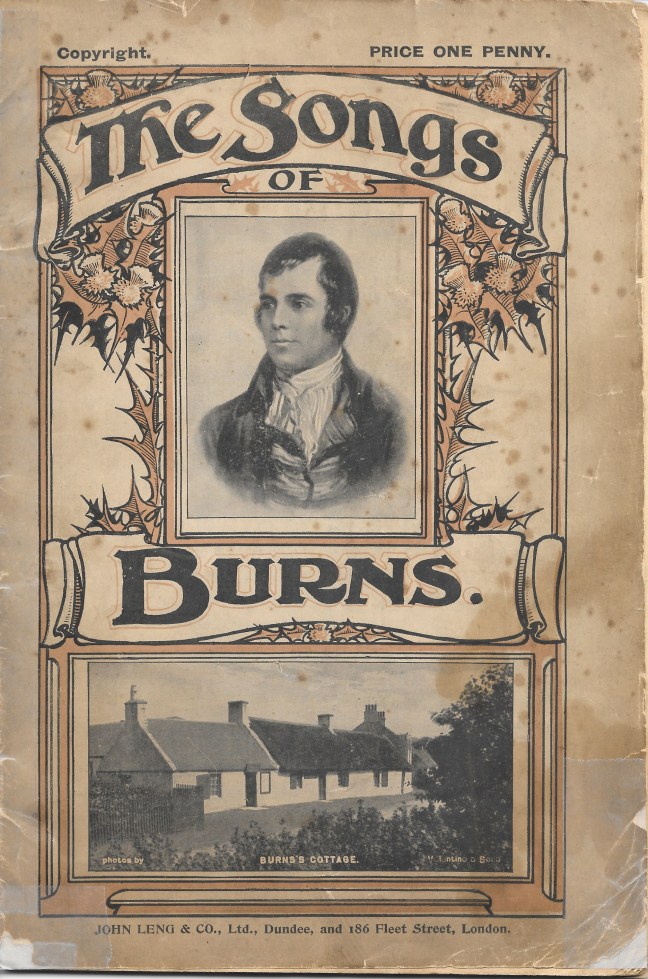
The advertisements in this little poetry booklet would be called ‘paratext’ by book historians. Paratext is anything around the text that forms the main body of a book. So the title page, index, contents pages, a preface or introduction – or advertisements for other publications – all count as paratext. It tells us more about the motivation of a publisher, what else they were publishing around the same time, and what they thought their readers would be interested in.


This was how John Leng & Co., of Dundee and Fleet Street, London, advertised their new booklet in  The Forfar Herald on Friday 20 January 1905:-

“THE SONGS OF Burns.โ€”Messrs John Leng & Co., Ltd., have in their latest penny booklet, entitled The Songs of Burns, published what should be specially attractive to many at this time of the year, in view of the approaching anniversary of Burns’ birthday. Most of the well-known songs are included, and an alphabetical table of contents is also printed. It is a good pennyworth.”

That one penny (one-twelfth of todayโ€™s modern 5p and equating to about 55p using the Bank of Englandโ€™s Inflation Calculator), was certainly affordable!  The Songs of Burns was sensibly and conveniently published just before Burnsโ€™ Day โ€“ 48 pages including an index and a full page advertisement for another of their publications. 

Itโ€™s just a book of verses โ€“ no music.  It was intended to be a companion to an earlier collection, The Peopleโ€™s Penny Burns (โ€˜a splendid selection from the poems of Scotlandโ€™s national bardโ€™), the same size and price.

No surprises as to the contents, then, but what caught my eye was actually the column advertisements. The publishers wasted no opportunity to advertise other publications that the reader might find interesting! Skimming through them enables us to profile the readership very clearly: largely women, concerned with feeding, clothing and amusing their families, and looking after the household pets.  ‘Aunt Kate’ was the branding John Leng used for many such publications – a homely and mature voice that readers could trust.

Meanwhile, women are advised that their menfolk should buy a booklet on effective reading, writing and debating. Of all the advertisements in this particular booklet, that’s the only ad for a title specifically aimed at men:-
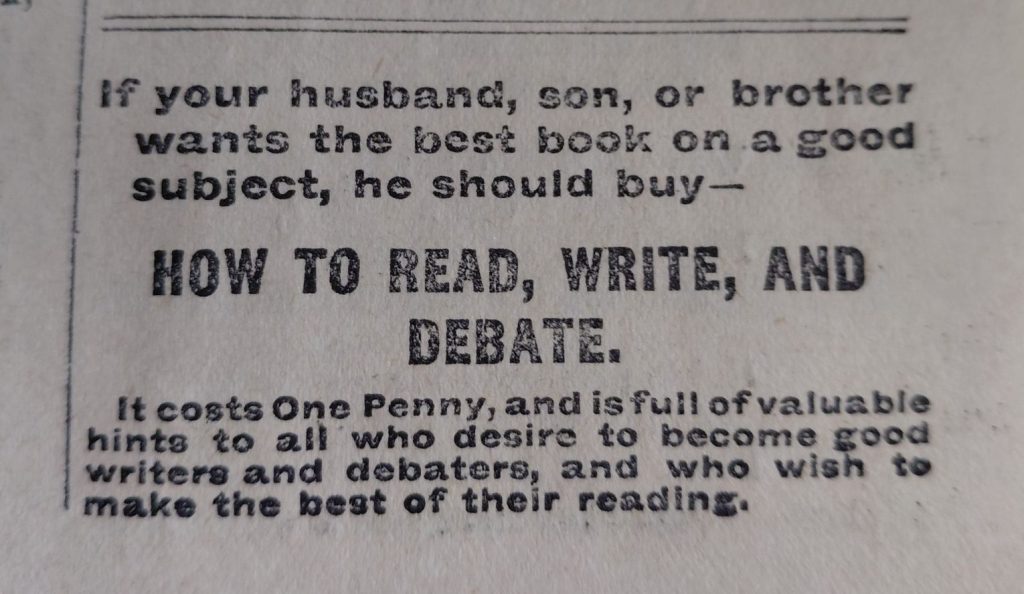
How to read, write, and debate …

We have no wi-fi today, so I’m going to stop here for now.  When I  return,  we’ll have a paratextual wander through the 48 pages of John Leng’s The Songs of Burns, and I’ll show you how Leng did their advertising!

(Contextual note: If you’re not well up on newspaper publishing history, I should explain that D C Thomson later acquired John Leng & Co. Ltd, so there’s a direct lineage to today’s The People’s Friend, Sunday Post and Scots Magazine. The People’sFriend goes back a very long way.) 
A Win for Scotland – and a Modest Tribute from an Organist  …

Yesterday morning’s organ music just had to be topical. To our small but enthusiastic congregation’s approval, I included ‘Flower of Scotland’, ‘Loch Lomond’, ‘Caledonia’, ‘500 miles’, ‘Highland Cathedral’ (not really Scottish, but much-loved all the same), and I managed something along the lines of ‘Never Stopped Dreaming’, the new World Cup anthem by Skerryvore.

Four bars!

The Leng Gold Medal Prize Book

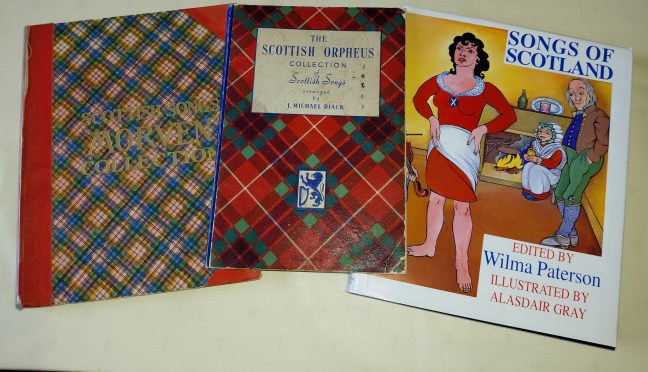
Three Scottish song books awarded as Leng Gold medal prizes - Morven, Scottish Orpheus and Songs of Scotland

Just a quick post today – I realised that I do actually possess all three of the Scottish song books that have been awarded to Leng Gold medallists over the years. They make a pleasing display!

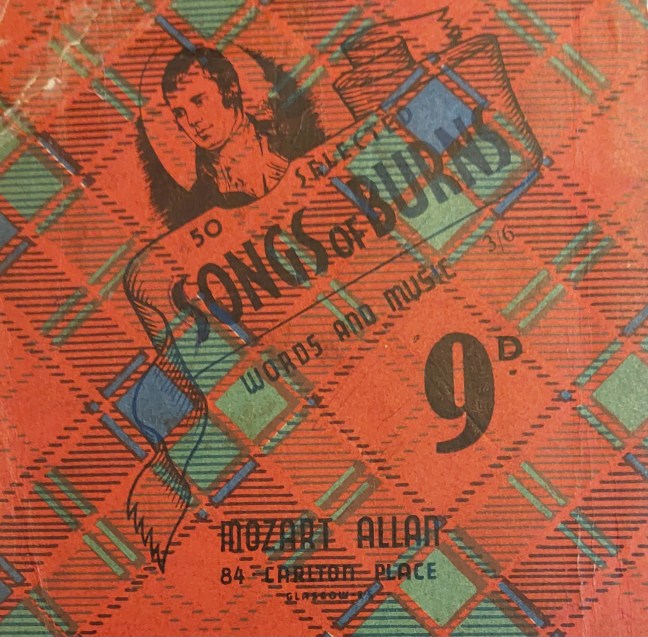
Mozart Allan’s Morven was awarded for many years. First published in 1890, it lived on for an incredibly long time, and is still valued by those who own it. I have spoken with winners a little younger than myself, who still have their copy of this book. (I have a hunch that Mozart Allan’s sister Euphemia may have had a hand in this publication. (See my recent RMA Research Chronicle article for more on this!*)

The next book prize was a Paterson book, J. Michael Diack’s Scottish Orpheus Collection, which actually goes back to 1922. (There had in fact been an earlier edition, resulting in Diack’s book being called the New Scottish Orpheus in some imprints.)

And lastly came Royal Scottish Academy of Music graduate Wilma Paterson and artist/author Alasdair Gray’s collaboration, their lavish Songs of Scotland (Mainstream Publishing, 1996), which is certainly amongst the most artistically pleasing modern collections that I’ve seen. Early winners of this one got a signed copy.

New Page about the Leng Medal Memories project

I’ve just made a new ‘Leng Medal Memories‘ page for this website – do take a look.


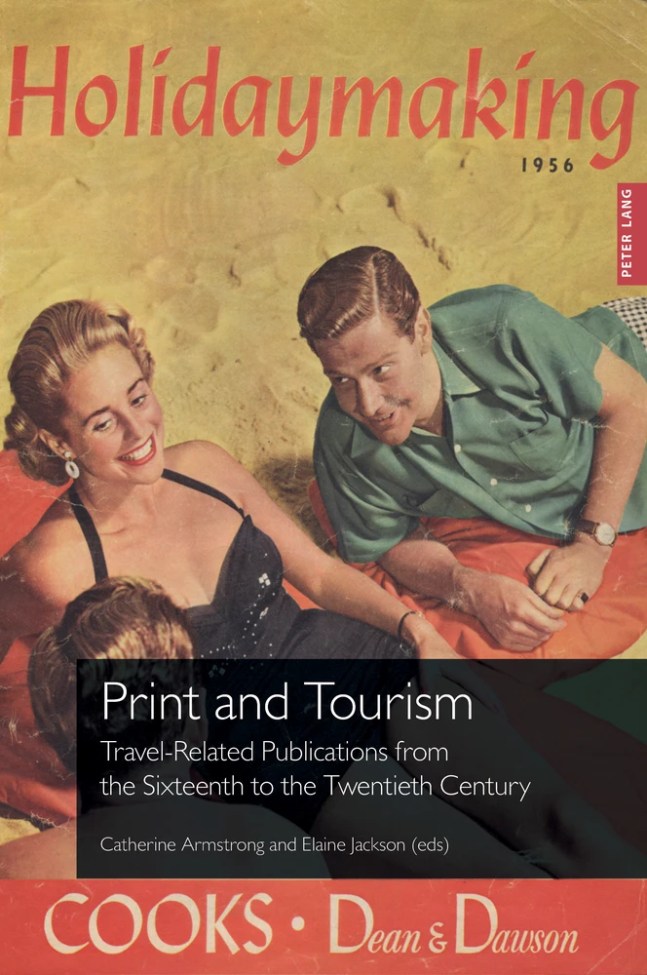
Print and Tourism (Peter Lang, 2026), with a Chapter on Mozart Allan’s ‘The Glories of Scotland’

An exciting email from the Print Networks Council popped into my inbox this week, announcing a new publication. It contains a chapter that evolved from a paper I submitted back in the pandemic. Yes, I mentioned Mozart Allan’s Glories of Scotland in my book, A Social History of Amateur Music-Making and National Identity, but I have treated it more extensively in this new chapter. It’s not every day that a musicologist gets to think about the Festival of Britain, book exhibitions, and post-war tourism. I thoroughly enjoyed both the researching and the writing of it – and I’m really looking forward to seeing an actual copy!

The latest volume in the Print Networks series has now been published; copies may be ordered via this link: https://www.peterlang.com/series/phc – where previous volumes in the series are also available.

Print and Tourism (the latest in the series)

A Week with a Difference – and only Halfway Through

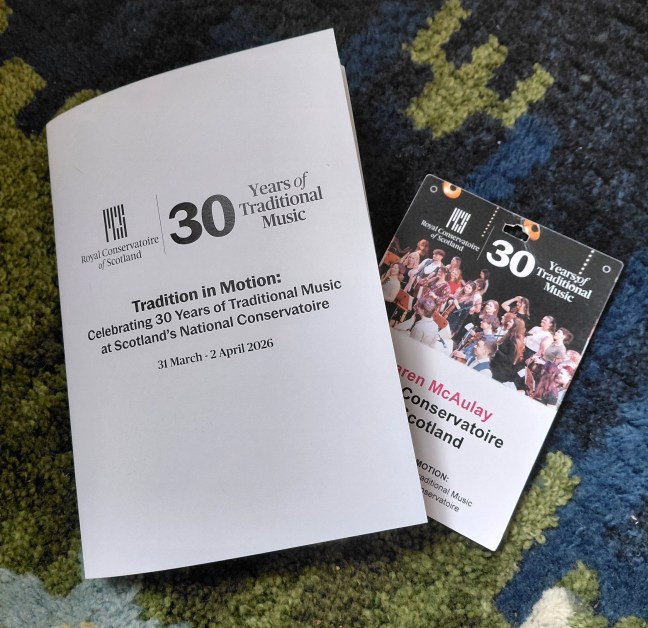
Programme and delegate tag for Tradition in Motion conference at RCS

I started my Leng Medal Memories interviews this week. What a pleasurable experience this is turning out to be! Two of my interviewees still have their silver medals, fifty-odd years later. I subsequently asked the Facebook group, Dundee Pals, and found that lots more people there still have their medals, too. It just goes to show how significant winning the medals actually was to the school pupils who took part.

Anyway, I thought I’d re-share the link to my questionnaire about Dundee Leng Medal memories, in case anyone finds this post and would like to participate in my research project:- https://tinyurl.com/LengMemories

Tradition in Motion


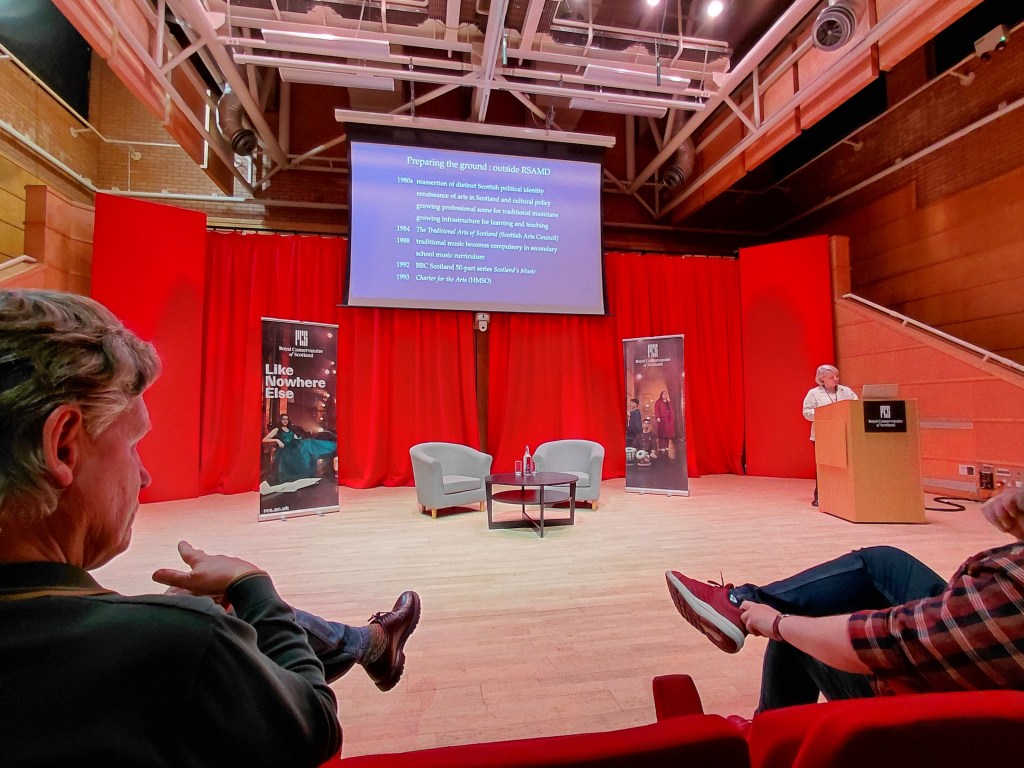
On a different note, yesterday (Tuesday) saw me as a delegate attending the first day of an Royal Conservatoire of Scotland conference, which was celebrating thirty years of traditional music at RCS. The keynote speaker was Dr Jo Miller, one of the co-founders of the Scottish Music degree. As she spoke, her slides showing the chronology of those early years, I realised that when I arrived at what was then RSAMD in 1988, this was just as trad music teaching was getting off the ground.

In 1988, I had no idea that I’d end up recommencing my doctoral studies fifteen years later – little did I know! – forsaking mediaeval polyphony to focus on Scottish songs. My choice of subject was very much influenced by the thought that I’d at least be studying something that might be useful and relevant to students on that course. It took me a little bit longer before I realised that what I was researching counted as ancient history – certainly relevant background, but a very different kind of Scottish song to what today’s contemporary musicians really want to focus on! The songs – their tunes and authors – are still important. But the harpsichord, and subsequently the piano arrangements that I was looking at, represented the soundscape of another world entirely. By contrast, yesterday I heard a paper about sounding Scottish in modern harp-playing; another about the use of traditional Scottish music in videogames; and a third talking about Robert Burns and Hamish Henderson. So many different aspects of Scottish traditional music!

No more interviews or meetings for me this week, but next week I’ll resume my researches. Meanwhile, I need to create another ‘Microsoft Forms’ online form. To think that when I was first a doctoral researcher, I took typing lessons so that I wouldn’t be dependent on paying a typist – as I had done for my Masters dissertation.

By the time I finished my second attempt at a PhD, we had email and PCs. Social media and all the extra Microsoft offerings were still in the future.

And now – I couldn’t even do this present research without Teams, Bookings and Forms. Times change!

Silver & Gold Leng Medal Memories, Update no.1

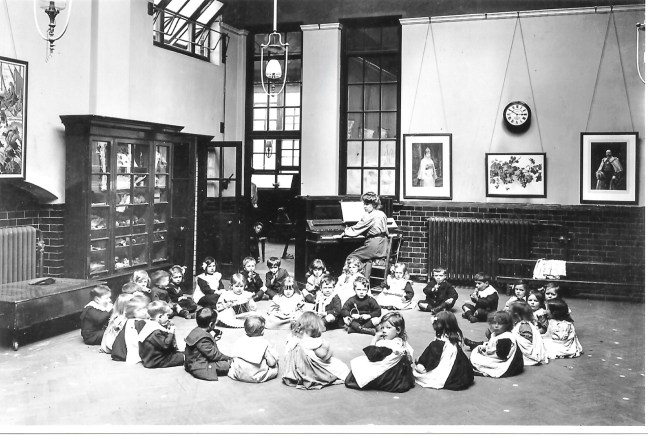
A classroom in Wandsworth, London, 1906 - the year that John Leng died

I’ve heard from many kind people who remember their involvement with the Leng Medal song competitions in Dundee, and now I’m starting to organise myself to speak to (or chat online, or email) everyone who has been in touch and expressed a willingness to share their memories with me.  If you’re one of those people, and you’ve expressed a preference to share your memories via one form of communication or another, I have noted this for future reference. You’ll be hearing from me soon! But if this blog post is the first you’ve heard of my research project, then you can find out more about it here, and you can get in touch with me here. It’s not too late!)

I hoped to hear from a lot of folk, and I certainly did!  So I’m contacting a few people at a time, to make it easier to organise my time.  If I can, I plan to focus on a decade or so at a time – though this idea may end up being rather loosely interpreted!

I’ve just started emailing people who indicated that they could chat online, inviting them to select a day and time.  I’ve allocated half an hour, so that we don’t feel rushed.  But if anyone fears their memories won’t take that long to share – there’s no need to worry – any anecdotes, however wee, will help fill out the story!

Microsoft Bookings

I very carefully set up my Microsoft Bookings page, and so far as I could tell, I did everything correctly. However, when I shared the link, I suspect I ticked a box that should not have been ticked. Anyway, I’ve unticked the box and shared the link again. I only confess this in case anyone received an email from me but couldn’t make the link work! I’ve re-sent the email and hopefully all is now well. Every day’s a school day, as they say.

‘Two notes’

One person has revealed that they sang two notes before the teacher told them to sit back down!

I think I may have mentioned before – I work part-time, so progress will be slow but steady! I’m very much looking forward to hearing more about this remarkably long-lived and successful competition!

Karen McAulay


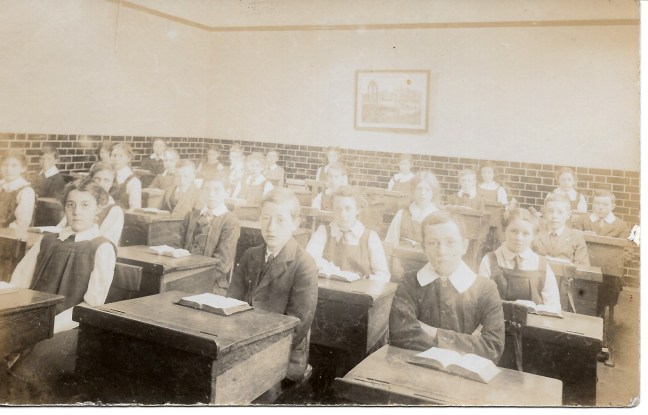
Faded old sepia photo of solemn children (Edwardian?) in a classroom
The ghosts of children long, long past – provenance unknown

Confession: these photos are from my own ephemera collection. They have absolutely no connection with Dundee, but just serve as a reminder of the days when Sir John Leng’s competition was initiated. The photo at the top of this blog was taken in Wandsworth in 1906, the year of Leng’s death. These little tots probably weren’t being taught Scots songs by their elegant teacher. On the other hand, the children at the foot of this blog post look exactly the age that early Leng Prize competitors must have been! This postcard comes with no caption whatsoever.


Links


My Leng Medal Memories research is funded by an Athenaeum Award from the Royal Conservatoire of Scotland.

Athenaeum Award Research Project: Silver and Gold Leng Medal Memories

Microsoft Forms icon. Cartoon person sitting holding a notebook or tablet.

This research is being funded by an Athenaeum Award from the Royal Conservatoire of Scotland.

Burns Night? Morning Too

I didn’t take organ music with me today. The church got ‘Green grow the rashes, O’ (I’d transcribed that from a recording); and the rest from memory:- ‘Afton Water’; ‘My luve is like a red, red rose’; ‘When you and I were young’; ‘Ae fond kiss’; and ‘Comin’ thro’ the rye’.

Well, it’s Burns Night! 

Friends of Wighton – A Celebration of Burns

The Wighton Collection's logo - various musical instruments

Burns Night is on Sunday 25 January 2026

This Saturday, 24 January, is virtually Burns’ Night, so what better afternoon to have A Celebration of  Burns at the Central Library of Dundee? I understand we were fully booked, but those lucky enough to have obtained a ticket had a great afternoon. Click on the link (as long as it’s still there) to see the line-up.

And I finished up  the event with a singalong of three favourite songs by Robert Burns – not bad for a girl from Norfolk! If I play, and everyone else sings, my English accent is well-concealed …

But what are the three songs?

Green Grow the Rashes, O.

Burnsโ€™ version of this pre-existing song appeared in the Scots Musical Museum song collection in the late 18th century. It was included in several school song books in the 20th century, and remains popular to this day.


CHORUS: Green grow the rashes, O; Green grow the rashes, O;
The sweetest hours that e’er I spend, Are spent amang the lasses, O.

1. There’s nought but care on ev’ry han’, In ev’ry hour that passes, O:
What signifies the life o’ man,  An’ ’twere na for the lasses, O.
Green โ€ฆ

2. The war’ly race may riches chase, – An’ riches still may fly them, O;
An’ tho’ at last they catch them fast, Their hearts can ne’er enjoy them, O.
Green โ€ฆ

3. Gie me a cannie hour at e’en, My arms about my dearie, O;
An’ war’ly cares, an’ war’ly men, May a’ gae tapsalteerie, O!
Green โ€ฆ

4. For you sae douce, ye sneer at this; Ye’re nought but senseless asses, O:
The wisest man the warl’ e’er saw, He dearly lov’d the lasses, O.
Green โ€ฆ

5. Auld Nature swears, the lovely dears Her noblest work she classes, O:
Her prentice han’ she try’d on man, An’ then she made the lasses, O.
Green โ€ฆ

Cominโ€™ Throโ€™ the Rye

There was a very famous soprano called Flora Woodman (1896-1981), who was born in London of Scottish parents. For some years, this was practically her signature tune โ€“ she sang it a couple of hundred times.

But why? I discovered that there had been a novel called Cominโ€™ throโ€™ the Rye, written by novelist Helen Mather back in 1875. The heroine sings this song as she walks through a rye-field; thatโ€™s the only connection with the song.

But the story became a silent movie in autumn 1916 โ€“ months after Flora started singing it. The film was so popular that the film producer remade it in 1923. Flora was still singing the song โ€“ probably because the film had popularised it – but the film went out of fashion when the first talkie, The Jazz Singer, came out in 1927, and Flora began to sing the song less often.
As for the words โ€“ the clean words – you wonโ€™t be surprised to learn that even this version didnโ€™t make it into any school books of Scottish songs!

Cominโ€™ throโ€™ the rye

1. Gin a body meet a body Comin’ thro’ the rye, Gin a body kiss a body, Need a body cry?

Chorus: Ilka lassie has her laddie, Nane, they say, hae I, Yet a’ the lads they smile at me, When comin’ thro’ the rye.

    2. Gin a body meet a body Comin’ frae the town, Gin a body kiss a body, Need a body frown?ย  Chorus

      3. Gin a body meet a body, Comin’ frae the well,ย  Gin a body kiss a body, Need a body tell? Chorus

        ย 4. ‘Mang the train there is a swain I dearly lo’e myself, But what his name or whaur his hame, I dinna care to tell. Chorus

          Auld Lang Syne

          Our last song needed no introduction!

           1. Should auld acquaintance be forgot, And never brought to mind?  Should auld acquaintance be forgot, And the days oโ€™ auld lang syne?

          Chorus: For auld lang syne, my dear, For auld lang syne,  Weโ€™ll takโ€™ a cup oโ€™ kindness yet, For auld lang syne.

          2. And hereโ€™s a hand, my trusty fiere, And gieโ€™s a hand oโ€™ thine;ย  And weโ€™ll takโ€™ a right guid willie-waught For the days oโ€™ auld lang syne.  Chorus.

            The Worse for Wear? Motherwell Replies to R A Smith

            So, 202 years ago today, William Motherwell received Smith’s letter with accompanying draft preface.  He would attend to the Scotish Minstrel Preface, he assured Smith.  But …

            … it would take him a week to get over his Hogmanay celebrations.

            However much had he celebrated?  Too hungover to do the task, but capable of writing back immediately?

            2nd January  – another five days to go!